You have been studying Russian for a while. You know how to say "I read" (я читаю) and "I read" (я прочитал). Wait, what? Two different verbs for the same action? And your textbook just told you that one is "finished" and the other is "ongoing," but when you try to use them in real conversation, you freeze. You are not alone. This is the wall that every learner hits, and most teachers just throw more conjugation tables at it.
How do you actually train chess?
Here is the truth: verb aspect in Russian is not a grammar trap. It is a superpower. Once you understand the one big idea behind perfective and imperfective, you stop guessing and start speaking with intention. No drills. No memorizing lists. Just a shift in how you see time.
The One Big Idea: A Movie vs. A Photograph
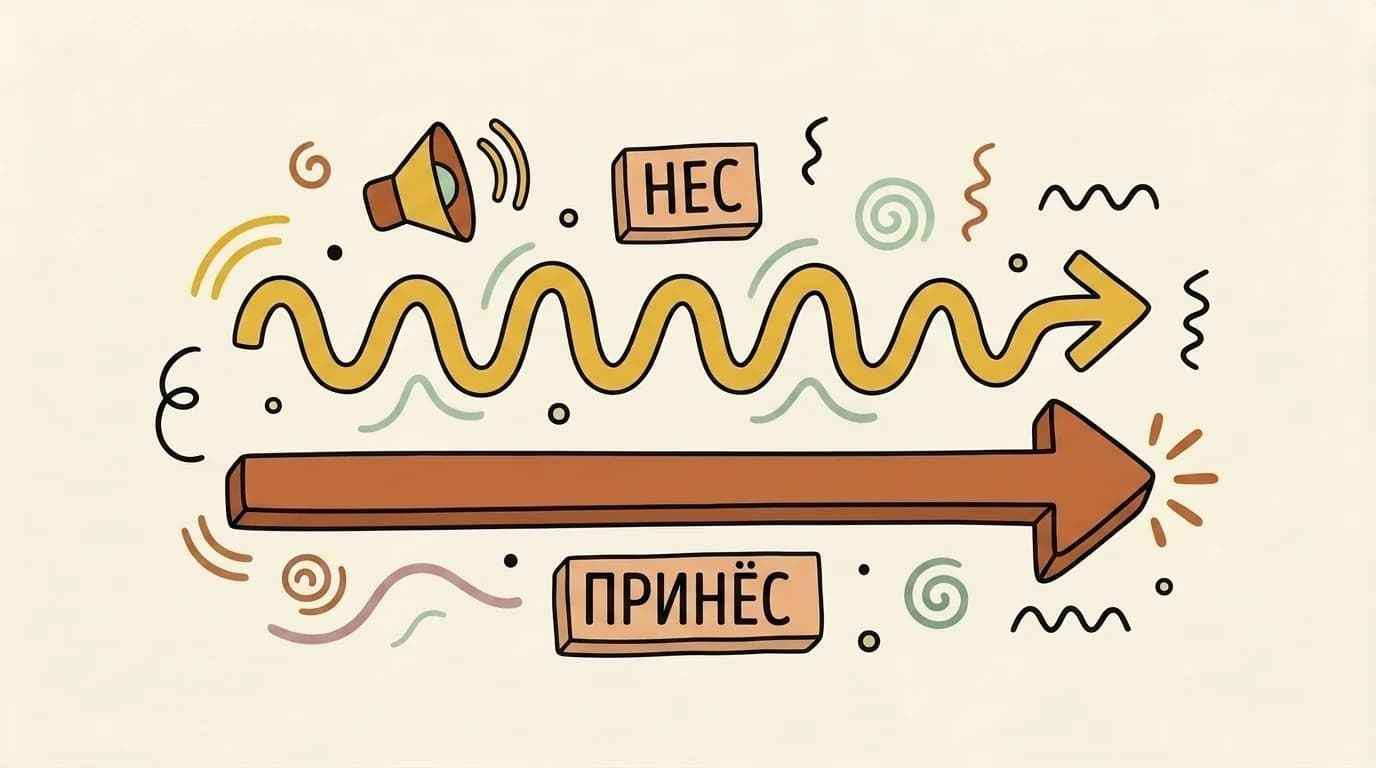
Think of any action in Russian as either a movie clip or a single photograph. The imperfective aspect is the movie. It shows the action in progress, the routine, the process. The perfective aspect is the photograph. It captures the action as a completed whole, a result, a single point in time.
Imperfective: You are watching the film. You see the beginning, the middle, maybe the end, but the focus is on the flow. Perfective: You snap a picture. The action is done. You see the outcome, not the process.
This is it. Everything else — prefixes, suffixes, stress shifts — is just a tool to switch between movie mode and photo mode. Let us look at real examples.
The Two Verbs You Already Know (But Maybe Misuse)
Take the verb "to do" or "to make." You have two forms: делать (delat', imperfective) and сделать (sdelat', perfective). They are the same verb at the core, but one is the movie, the other is the photograph.
-
Я делаю уроки. (Ya delayu uroki.) "I am doing homework." This is the movie. You are in the middle of it. No end point in sight yet.
-
Я сделал уроки. (Ya sdelal uroki.) "I did my homework." This is the photograph. The homework is done. Result achieved.
Now, a common beginner mistake: using the perfective for a repeated action. You cannot say "Каждый день я сделаю уроки" (Kazhdy den' ya sdelayu uroki) to mean "Every day I do my homework." Why? Because a repeated action is a series of movies, not a single photograph. You need the imperfective: Каждый день я делаю уроки.
Tip: If you can add "every day," "usually," "always," or "for a while" to your sentence, you almost always need the imperfective. If you can add "already," "finally," or "just now," you need the perfective.
The Prefix Trick That Changes Everything
Russian loves prefixes. You attach a prefix to an imperfective verb, and boom, you get a perfective. The most common ones are про- (pro-), на- (na-), and с- (s-). But here is the catch: the prefix does not just make it perfective. It often adds a specific meaning.
Take читать (chitat', "to read," imperfective). Add про- and you get прочитать (prochitat', "to read completely," perfective). Add на- and you get начитать (nachitat', "to read a lot of something," perfective). The prefix changes the type of photograph you take.
-
Я читал книгу. (Ya chital knigu.) "I was reading a book / I used to read a book." Movie mode. No result implied.
-
Я прочитал книгу. (Ya prochital knigu.) "I read the book (from cover to cover)." Photograph. Finished.
But here is where it gets fun. Some verbs have a completely different word for the perfective. No prefix. Just a new verb. This is rare, but it exists. For example, говорить (govorit', "to speak," imperfective) becomes сказать (skazat', "to say," perfective). You have to learn these as pairs. But do not panic. Most verbs follow the prefix pattern.
Heads up: Do not try to memorize every prefix and its meaning at once. Start with the most common ones: про- (completion), на- (accumulation), с- (result), and вы- (outward movement). The rest will come naturally as you hear them in context.
The Perfective Trap: When You Think You Know But You Do Not
Many learners assume that perfective always means "action done in the past." Not true. Perfective can be future, too. And it can be present in a special way.
- Я позвоню тебе завтра. (Ya pozvonyu tebe zavtra.) "I will call you tomorrow." Here, позвонить (pozvonit') is perfective future. The call is a single, completed event in the future. You are not describing the process of calling. You are stating the result: the call will happen and finish.
Now, compare with the imperfective future: Я буду звонить тебе каждый день. (Ya budu zvonit' tebe kazhdyy den'.) "I will call you every day." This is a routine, a series of calls. Movie mode again.

The perfective present does not exist in standard Russian. If you see a perfective verb in a present tense form (like я сделаю), it is actually future. This is a common source of confusion. Remember: perfective verbs have only past and future tenses. Imperfective verbs have past, present, and future (with the auxiliary verb быть, byt').
Real Life: How Russians Actually Use Aspect
You are at a party in Moscow. A friend asks: "Ты уже поел?" (Ty uzhe poel?) "Have you already eaten?" They use the perfective поел (poel, from есть, yest', "to eat") because they are asking about the result. Are you full? Did the eating happen? They care about the outcome, not the process.
Later, you are cooking together. They say: "Давай, я буду готовить, а ты режь овощи." (Davay, ya budu gotovit', a ty rezh' ovoshchi.) "Come on, I will cook, and you cut the vegetables." Here, готовить (gotovit') is imperfective because the cooking is a process happening over time. The cutting (режь, rezh', from резать, rezat') is also imperfective because it is an ongoing action.
Now, imagine you finish cutting. You say: "Я нарезал все овощи." (Ya narezal vse ovoshchi.) "I cut all the vegetables." You used the perfective нарезал (narezat') because the task is complete. The result is there: a pile of chopped vegetables.
Notice how the choice of aspect changes the flow of the conversation. It is not just grammar. It is how Russians organize their thoughts about time and action.
The Cultural Shortcut: Movies, Music, and Memes
Russian pop culture loves aspect play. Listen to the song "Я свободен" (Ya svoboden, "I am free") by Кипелов (Kipelov). The lyrics switch between imperfective and perfective to tell a story of transformation. "Я был привязан" (Ya byl privyazan, "I was tied," imperfective) describes a state. Then "Я разорвал все цепи" (Ya razorval vse tsepi, "I broke all chains," perfective) announces the completed action.
Or watch the movie "Брат" (Brat, "Brother"). The main character, Danila, uses perfective verbs to make decisions and finish tasks. "Я решил" (Ya reshil, "I decided") and "Я сделал" (Ya sdelal, "I did"). His brother uses imperfective to talk about plans that never happen. The aspect choice mirrors their personalities.
Even memes play with aspect. A classic: "Я не спал, я просто закрыл глаза" (Ya ne spal, ya prosto zakryl glaza). "I did not sleep, I just closed my eyes." The perfective закрыл (zakryl) emphasizes the single action of closing. The imperfective спал (spal) describes the ongoing state that did not happen. The joke is in the contrast.
The One Rule That Covers 90% of Cases
Here is the practical shortcut. When you form a sentence, ask yourself: "Am I describing the action itself (the process, the routine, the duration) or the result of the action (the completion, the single event, the outcome)?"
-
Process, routine, duration, repetition, description of how something was done: imperfective.
-
Result, single event, completion, change of state, something that happened exactly once: perfective.
That is it. The rest is just vocabulary.
Tip: When you learn a new verb, always learn it as a pair. Write down читать / прочитать, делать / сделать, говорить / сказать. Do not learn one without the other. Your brain will thank you.
Try This Today
You do not need a textbook for this. You need practice. Here are five mini-tasks to do right now. No writing. Just thinking and speaking.
-
Look around your room. Say three actions you are doing right now (imperfective). "Я сижу, я смотрю, я слушаю." (Ya sizhu, ya smotryu, ya slushayu.) "I am sitting, I am looking, I am listening."
-
Think of three things you finished today (perfective). "Я поел, я выпил кофе, я закрыл дверь." (Ya poel, ya vypil kofe, ya zakryl dver'.) "I ate, I drank coffee, I closed the door."
-
Describe your morning routine (imperfective). "Я встаю, я чищу зубы, я завтракаю." (Ya vstayu, ya chishchu zuby, ya zavtrakayu.) "I get up, I brush my teeth, I have breakfast."
-
Imagine you just finished a task. Say it in perfective. "Я написал письмо." (Ya napisal pis'mo.) "I wrote a letter."
-
Now, tell someone you will do something tomorrow (perfective future). "Я позвоню тебе." (Ya pozvonyu tebe.) "I will call you."
If you want to practice this in real conversation, with feedback and no pressure, I teach 1-on-1 online lessons. We skip the drills and focus on what actually makes you speak. Because the goal is not to conjugate. The goal is to say what you mean. And with aspect, you finally can.