You have probably heard the horror stories. Six cases. Endings that change every time you blink. Tables that look like a math problem written in a foreign alphabet. And somewhere in the back of your mind, you wonder: do Russians actually think in these cases, or do they just memorise a secret cheat code nobody shared with you?
How do you actually train chess?
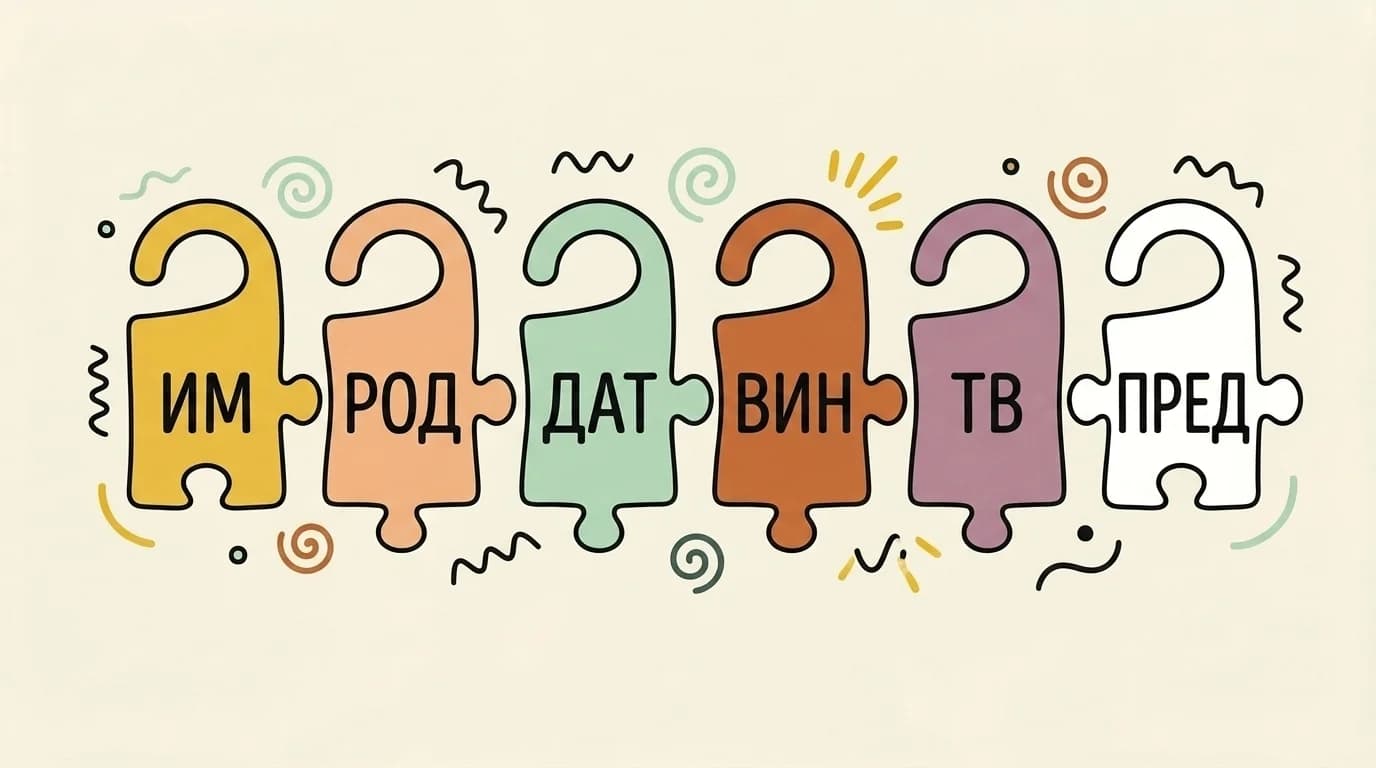
The truth is simpler than you think. Cases are not a separate subject you have to study. They are just the way Russian shows who did what to whom. English does the same thing, but with word order and prepositions. Russian does it with the endings of words. Once you stop seeing cases as a monster and start seeing them as a set of habits, everything clicks.
Let me walk you through each case with real examples, real situations, and zero tables. I promise you will not need to draw a grid for this.
What a case actually does (and why English has them too)
A case is just a marker on a noun, adjective, or pronoun that tells you its role in the sentence. In English, you know who is doing the action because of word order. "The cat chased the dog" means the cat is the chaser. If you flip it, "The dog chased the cat," the meaning changes completely. Russian does not rely on word order that way. It relies on the endings.
Think of it like this. In English, you have a few leftover cases. "I" becomes "me" when it is the object. "He" becomes "him." "She" becomes "her." That is exactly what Russian does, but for every noun, adjective, and pronoun, and for more roles than just subject and object.
The good news is that you already know how to switch "I" to "me" without thinking. You do not pause to consult a table before saying "Give it to me." Your brain just knows. Russian cases work the same way. It is a habit, not a calculation.
Heads up: Do not try to learn all six cases at once. Focus on one at a time, and let your ear get used to the sound of the endings. Your brain will start expecting them.
The Nominative case (Именительный падеж) – the default you already know
This is the case of the subject. The person or thing that is doing the action. It is also the form you find in the dictionary. When you learn a new noun, you learn it in the Nominative.
стол (stol, "table")книга (kniga, "book")я (ya, "I")
If you say Я читаю книгу (Ya chitayu knigu, "I am reading a book"), the word я (ya) is in the Nominative because it is the subject. The word книгу (knigu) is not. It is in the Accusative, because it is the object. But we will get to that.
For now, just remember that the Nominative is your starting point. It is the name tag. Everything else is a modification.
The Accusative case (Винительный падеж) – the direct object
This is the case you use for the thing that receives the action. If you see something, the thing you see is in the Accusative. If you love someone, that person is in the Accusative.
For feminine nouns ending in а or я, the ending changes to у or ю.
книга (kniga, "book")becomesкнигу (knigu)мама (mama, "mom")becomesмаму (mamu)
For masculine nouns and neuter nouns, the Accusative often looks the same as the Nominative for inanimate objects. For animate objects (people, animals), the masculine Accusative looks like the Genitive. But do not panic. Focus on feminine nouns first because they are the most visible.
Example: Я вижу маму (Ya vizhu mamu, "I see mom"). Notice how мама changed to маму. That is the Accusative at work.
Tip: When you learn a new verb, ask yourself: does this verb need an object in the Accusative? Most verbs that describe seeing, hearing, loving, or making something do. That way you already know which case to use.
The Genitive case (Родительный падеж) – possession and "of"
The Genitive is the case of belonging. It answers the question "of whom?" or "of what?" It also shows up after numbers, after negation, and after certain prepositions like у (u, "at/near") and без (bez, "without").
книга (kniga)becomesкниги (knigi)стол (stol)becomesстола (stola)я (ya)becomesменя (menya)
Example: Это книга моего друга (Eto kniga moego druga, "This is my friend's book"). The word друга (druga) is in the Genitive because it shows possession. The word моего (moego) is the Genitive form of мой (moy, "my").
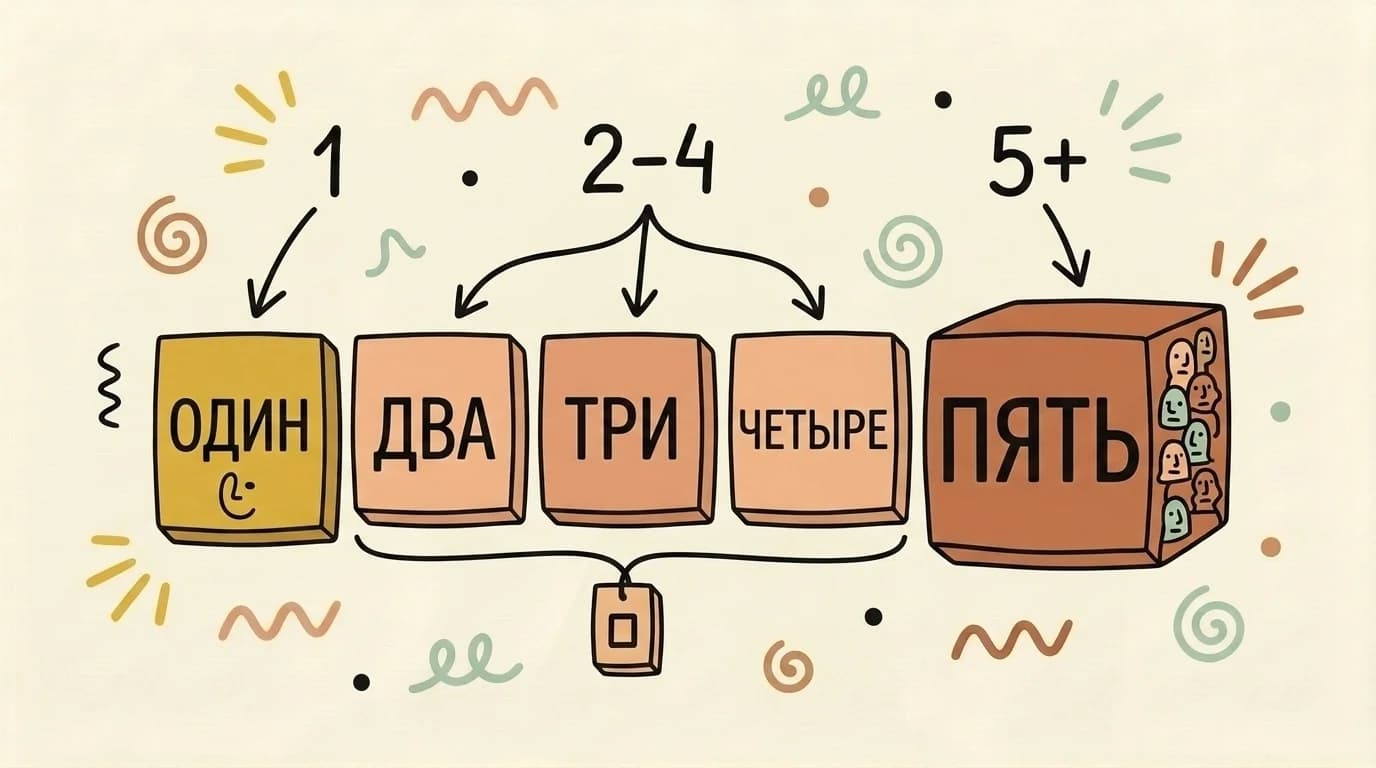
The Genitive is also used after numbers 2, 3, 4 and all higher numbers. Два стола (Dva stola, "two tables"). Not два стол. That is a classic mistake. The number itself does not change, but the noun goes into the Genitive.
If you ever feel lost, think of the Genitive as the case that translates to "of something" or "something's." It is your go-to for ownership, absence, and quantity.
The Dative case (Дательный падеж) – the indirect object
The Dative is the case of the recipient. It answers "to whom?" or "to what?" If you give something to someone, that someone is in the Dative. If you say something to a person, that person is in the Dative.
подруга (podruga, "friend (female)")becomesподруге (podruge)брат (brat, "brother")becomesбрату (bratu)я (ya)becomesмне (mne)
Example: Я даю книгу подруге (Ya dayu knigu podruge, "I give a book to my friend"). The book is in the Accusative (the thing being given). The friend is in the Dative (the recipient).
The Dative also shows up after certain verbs like помогать (pomogat, "to help") and звонить (zvonit, "to call"). You help to someone, you call to someone. That is the Dative logic.
Heads up: Do not confuse the Dative with the Accusative. The Accusative is for the direct object (the thing directly affected). The Dative is for the indirect object (the person who benefits or receives). If you can insert "to" before the word in English, it is probably Dative in Russian.
The Instrumental case (Творительный падеж) – with what, by whom
The Instrumental is the case of the tool or the companion. It answers "with what?" or "with whom?" It also shows up after the verb быть (byt, "to be") in the past and future when talking about professions or temporary states.
ложка (lozhka, "spoon")becomesложкой (lozhkoy)друг (drug, "friend")becomesдругом (drugom)я (ya)becomesмной (mnoy)
Example: Я пишу ручкой (Ya pishu ruchkoy, "I write with a pen"). The pen is the tool, so it is in the Instrumental.
Example for profession: Он был врачом (On byl vrachom, "He was a doctor"). After был (byl, "was"), the profession goes into the Instrumental.

The Instrumental is also used with the preposition с (s, "with"). Я иду с другом (Ya idu s drugom, "I am going with a friend"). The friend is the companion, so Instrumental.
Think of the Instrumental as the "by means of" case. If you are doing something using something, that something is likely Instrumental.
The Prepositional case (Предложный падеж) – location and topics
The Prepositional is the only case that is never used without a preposition. It always comes after о (o, "about"), в (v, "in/at"), or на (na, "on/at").
стол (stol)becomesстоле (stole)книга (kniga)becomesкниге (knige)я (ya)becomesобо мне (obo mne)
Example: Я думаю о книге (Ya dumayu o knige, "I am thinking about the book"). The book is the topic, so Prepositional after о.
Example for location: Книга на столе (Kniga na stole, "The book is on the table"). The table is the location, so Prepositional after на.
The Prepositional is actually one of the easiest cases because it has only two main prepositions (в and на) plus о. And the endings are very regular. Once you learn the pattern for one noun, you know it for almost all nouns.
Tip: When you learn a new preposition, always memorise it with the case it requires. в + Prepositional for location. в + Accusative for direction. That small habit will save you years of confusion.
How to stop treating cases like a chore
The biggest mistake learners make is trying to memorise all endings before they ever speak. That is like learning the rules of a sport by reading the rulebook and never stepping onto the field. You need to hear and use cases in real sentences.
Start with one case at a time. Spend a week on the Accusative. Every time you see an object, say it in the Accusative out loud. Я вижу стол (Ya vizhu stol, "I see a table"). Я люблю музыку (Ya lyublyu muzyku, "I love music"). Make it a habit.
Then add the Genitive. У меня есть книга (U menya est kniga, "I have a book"). Notice how меня is Genitive after у. That is a fixed structure. Learn it as a chunk.
Listen to Russian music or watch clips from Russian movies. Pay attention to how people say меня vs мне vs мной. Your ear will start to notice patterns before your brain can explain them.
And if you ever feel stuck, remember that even Russian kids make case mistakes until they are six or seven. They learn by hearing and repeating, not by studying tables. You can do the same.
Try this today
Pick one case to focus on. I recommend the Accusative because it is the most useful after the Nominative.
-
Take three feminine nouns you know:
мама (mama, "mom"),собака (sobaka, "dog"),книга (kniga, "book"). Write them in the Accusative:маму,собаку,книгу. -
Make a sentence with each using the verb
вижу (vizhu, "I see"). Say them out loud:Я вижу маму (Ya vizhu mamu),Я вижу собаку (Ya vizhu sobaku),Я вижу книгу (Ya vizhu knigu). -
Do the same with the verb
люблю (lyublyu, "I love").Я люблю маму (Ya lyublyu mamu),Я люблю собаку (Ya lyublyu sobaku),Я люблю книгу (Ya lyublyu knigu). -
Now add one masculine noun, like
стол (stol, "table"). In the Accusative, it stays the same:Я вижу стол (Ya vizhu stol). Notice that inanimate masculine nouns do not change. Say it five times. -
Finally, record yourself saying all four sentences. Listen back. Does the Accusative sound natural yet? If not, repeat tomorrow. It will click faster than you expect.
If you want to go deeper with real conversation practice, my 1-on-1 online lessons are built exactly for this. We skip the drills and talk about things you actually care about. Cases show up naturally, and I help you hear them until they feel like second nature. No tables required.