You sit down to study Russian verbs. You open a textbook. Thirty pages later, you've memorized six endings for one verb, and you still can't say "I'm going" without pausing to count on your fingers. Something is wrong. The problem isn't you. The problem is that most resources teach Russian verb conjugation like you're preparing for a linguistics exam, not like someone who just wants to speak.
How do you actually train chess?
Let's fix that. Here's the 80/20 of Russian verb conjugation, the part that actually matters for real conversations.
The One Rule That Covers 80% of Verbs
Russian verbs come in two major groups, usually called the first and second conjugations. But forget those names for a second. Think of them as "E-verbs" and "I-verbs." That's the real difference.
For E-verbs, the pattern is simple. Take the infinitive, drop the last three letters (usually -ть), and add endings that contain the letter E. For I-verbs, you drop the last three letters and add endings that contain the letter I. That's it.
Here's the cheat sheet for the present tense:
| Person | E-verb ending | I-verb ending |
|---|---|---|
| я (I) | -у/-ю | -у/-ю |
| ты (you, informal) | -ешь | -ишь |
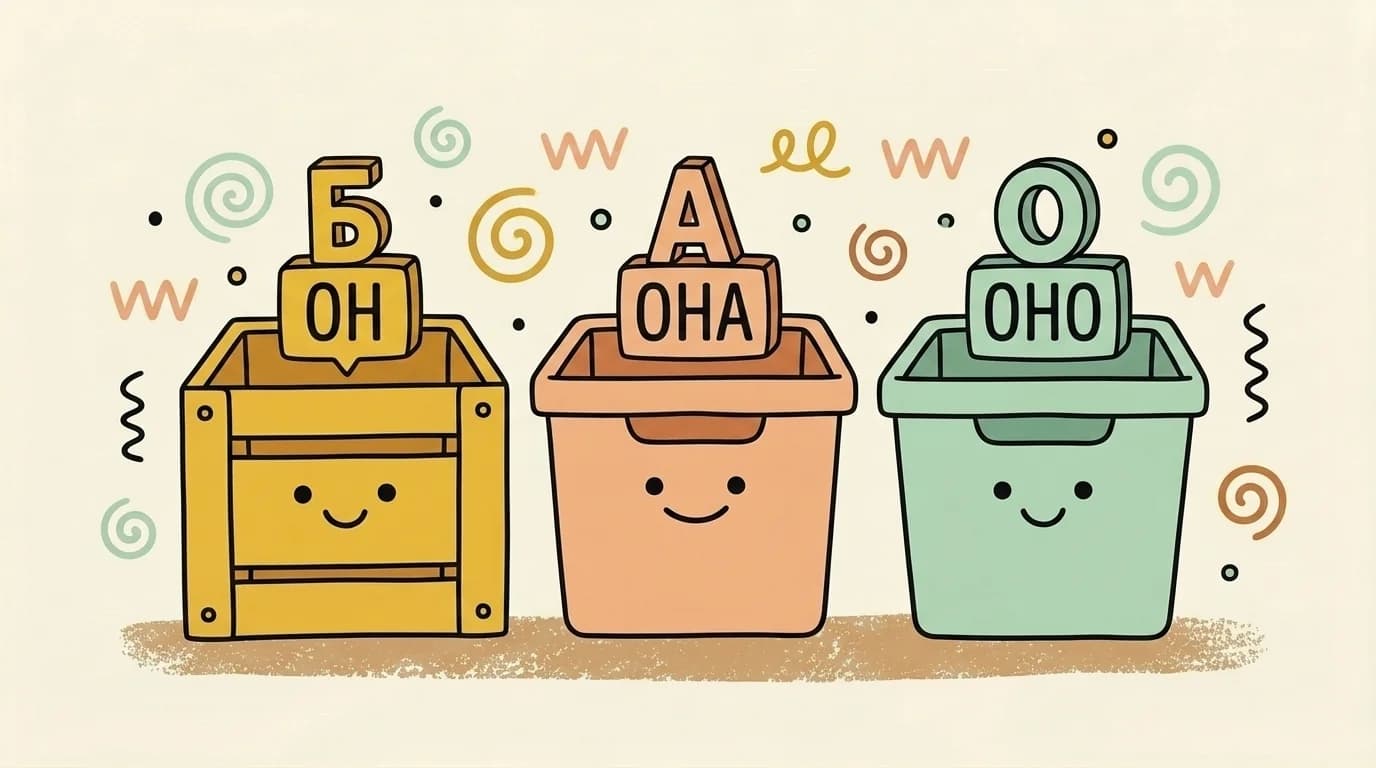
| он/она/оно (he/she/it) | -ет | -ит |
| мы (we) | -ем | -им |
| вы (you, formal/plural) | -ете | -ите |
| они (they) | -ут/-ют | -ат/-ят |
Notice that the "я" and "они" endings are different from the rest. That's the only curveball. Everything else is just E or I.
Let's test it. Take читать (chitat', "to read"). Drop -ть, you get чита-. Add E-endings: я читаю (ya chitayu, "I read"), ты читаешь (ty chitaesh', "you read"), мы читаем (my chitaem, "we read"). Easy.
Now take говорить (govorit', "to speak"). Drop -ть, you get говори-. Add I-endings: я говорю (ya govoryu, "I speak"), ты говоришь (ty govorish', "you speak"), мы говорим (my govorim, "we speak"). Notice the я form shifts from говори- to говорю. That's a common sound change, but the pattern is still there.
Tip: If you're not sure whether a verb is E or I, check the third person plural (they). If it ends in -ут or -ют, it's E. If it ends in -ат or -ят, it's I. That's your secret decoder ring.
The Five Verbs That Break All the Rules
Every language has its rebels. Russian has about five verbs that refuse to follow the E or I patterns. Learn these by heart, and you'll dodge 90% of beginner confusion.
-
быть(byt', "to be") – This one barely exists in the present tense. You just drop it. "I am a student" isя студент(ya student, literally "I student"). No verb. The past tense works fine:я был(ya byl, "I was"). The future tense uses a whole different verb,будет(budet, "will be"). But present tense? Skip it. -
хотеть(khotet', "to want") – This verb is a shapeshifter. Singular uses I-endings:я хочу(ya khochu, "I want"),ты хочешь(ty khochesh', "you want"). Plural uses E-endings:мы хотим(my khotim, "we want"),они хотят(oni khotyat, "they want"). Yes, it's weird. Just memorize it. -
есть(yest', "to eat") – Drop the infinitive and you getес-. But the conjugations areя ем(ya yem, "I eat"),ты ешь(ty yesh', "you eat"),мы едим(my yedim, "we eat"),они едят(oni yedyat, "they eat"). No logic, just memory. -
дать(dat', "to give") – Similar toесть.я дам(ya dam, "I give"),ты дашь(ty dash', "you give"),мы дадим(my dadim, "we give"),они дадут(oni dadut, "they give"). -
бежать(bezhat', "to run") – Mostly I-endings, but the third person plural isони бегут(oni begut, "they run"), which is an E-ending. It's like the verb couldn't decide what it wanted to be.
Heads up: These five verbs are so common that you'll hear them every single day. Don't stress about the patterns. Just use them in sentences. "I want coffee" = я хочу кофе (ya khochu kofe). "They eat pizza" = они едят пиццу (oni yedyat pitsu). Repetition will lock them in.
The Past Tense Is Actually Easier Than English
Russian past tense is a relief. You don't conjugate for person. You only change the ending based on gender and number. One rule, four forms.
Take the infinitive, drop -ть, add:
-лfor masculine:я читал(ya chital, "I read" – said by a man)-лаfor feminine:я читала(ya chitala, "I read" – said by a woman)-лоfor neuter:оно читало(ono chitalo, "it read")-лиfor plural:мы читали(my chitali, "we read")
That's it. No "I read, you read, he reads" nonsense. You just say the verb once, add the gender marker, and you're done.
The only catch is verbs that end in -чь, -ти, or have a consonant stem. For example, мочь (moch', "can"): past tense is я мог (ya mog, "I could" – masculine), она могла (ona mogla, "she could"). No -ть to drop, so you just add the endings to the stem. But honestly, these are rare. Focus on the regular ones first.
Future Tense: Two Ways, One Is a Cheat Code
Russian has two future tenses. One is a cheat code for beginners. The other requires a bit more work.
The cheat code is the compound future. You take the future form of быть (to be) and add the infinitive. That's it. Я буду читать (ya budu chitat', "I will read"), ты будешь читать (ty budesh' chitat', "you will read"), мы будем читать (my budem chitat', "we will read"). The verb быть conjugates like an E-verb, which you already know. So you can form any future sentence without memorizing new verb endings.

The second future is the perfective future. Some verbs come in pairs: one for ongoing actions (imperfective) and one for completed actions (perfective). The perfective verb uses present tense endings to talk about the future. For example, сделать (sdelat', "to do" – perfective) conjugates like a present tense E-verb: я сделаю (ya sdelayu, "I will do [and finish it]"). But you don't need to worry about this yet. Start with the compound future. It's your training wheels, and training wheels are fine.
Tip: When you're ordering in a restaurant, use the compound future. "I will have coffee" = я буду кофе (ya budu kofe). Russians will understand you perfectly. Don't overthink it.
The Real Secret: Imperfective vs. Perfective
This is the part that trips up most learners, but it's simpler than it seems. Think of it like a movie scene. Imperfective is the whole scene playing. Perfective is the final frame.
- Imperfective:
я читал книгу(ya chital knigu, "I was reading the book" or "I read the book" – ongoing, no emphasis on completion). - Perfective:
я прочитал книгу(ya prochital knigu, "I read the book [and finished it]").
In conversation, you'll use imperfective for habits, descriptions, and ongoing actions. You'll use perfective for results and single completed actions.
Here's a cultural example. In the movie "Moscow Does Not Believe in Tears," the main character says я всё успею (ya vsyo uspeyu, "I will manage everything"). The verb успеть (uspet', "to manage") is perfective. She's not talking about the process of managing. She's talking about the result. That's the perfective vibe.
To form perfective verbs, you usually add a prefix to the imperfective. Common prefixes include про-, на-, с-, по-. For example:
читать(chitat', "to read" – imperfective) →прочитать(prochitat', "to read through" – perfective)делать(delat', "to do" – imperfective) →сделать(sdelat', "to do" – perfective)пить(pit', "to drink" – imperfective) →выпить(vypit', "to drink up" – perfective)
You'll learn these naturally as you encounter them. Don't try to memorize a list. Just notice when a native speaker uses one vs. the other.
How to Actually Practice (Without Drills)
You don't need to write out conjugation tables. You need to hear and use verbs in context.
Start with the verbs you use most. "To be" (быть, skip present), "to have" (у меня есть, which is a whole different structure but essential), "to want" (хотеть), "to go" (идти/ехать), "to do" (делать), "to speak" (говорить). Drill these in sentences, not in isolation.
For example, make a list of five things you want to say today:
Я хочу кофе(Ya khochu kofe, "I want coffee")Я иду в магазин(Ya idu v magazin, "I'm going to the store")Я говорю по-русски(Ya govoryu po-russki, "I speak Russian")Я делаю уроки(Ya delayu uroki, "I'm doing homework")Она читает книгу(Ona chitaet knigu, "She is reading a book")
Say them out loud. Record yourself. Listen back. That's practice.
If you want a shortcut, one-on-one online lessons with a native speaker like me can help you hear the patterns in real time. We'll skip the drills and go straight to conversation. You'll be conjugating without thinking within a few sessions.
Try This Today
Here's a five-minute exercise to lock in the 80/20.
-
Pick three E-verbs from this list:
работать(rabotat', "to work"),играть(igrat', "to play"),слушать(slushat', "to listen"). Conjugate each forя,ты, andмы. Say them out loud. -
Pick three I-verbs from this list:
любить(lyubit', "to love"),спать(spat', "to sleep"),варить(varit', "to cook"). Conjugate each forя,ты, andмы. Say them out loud. -
Write one past tense sentence for each gender. Example: "I read yesterday." Say
я читал(if you're a man) orя читала(if you're a woman). Then say "we read" =мы читали. -
Make one future sentence using the compound future. "I will work tomorrow" =
я буду работать завтра(ya budu rabotat' zavtra). Say it three times. -
Find one perfective verb in a Russian song or movie subtitle. Write down the imperfective version too. For example, if you hear
сделать(sdelat'), note that the imperfective isделать(delat'). This trains your ear to notice the pattern.
That's it. Five minutes, no tables, no drills. You're now using the 80/20 of Russian verb conjugation. The rest will come with time and conversation.