You know the drill. You sit down, open the textbook, and spend twenty minutes memorizing the difference between "to go by foot" and "to go by vehicle." Then you try to say "I'm going to the store" to a real Russian speaker, and they look at you like you just asked them to solve a quadratic equation.
What kind of player are you really?
The problem isn't you. It's the textbook. It teaches you a version of Russian that exists only in the minds of people who haven't spoken to a real human since the Soviet era. Real Russian is messy, fast, and full of shortcuts. It's the language your Russian friend uses when they're excited, tired, or drunk. It's the language of memes, street signs, and late-night conversations at the dacha.
So how do you make the jump? You stop treating Russian like a subject to be studied and start treating it like a tool to be used. Here's how.
Why textbooks lie to you
Textbooks are built for a classroom. They assume you have unlimited time, a patient teacher, and zero interest in sounding natural. They teach you the full, formal version of every phrase because it's easier to explain. But real Russians don't talk like that.
Take the phrase "I'm going to the store." Textbook version: Я иду в магазин (ya idu v magazin). Perfectly correct. But a real Russian might say Я в магазин (ya v magazin), dropping the verb entirely. Or Я пошёл (ya poshyol, "I went" past tense, which implies "I'm off now"). Or just В магазин (v magazin) with a nod of the head.
Textbooks also love to teach you all six cases right away, as if you need to decline "dog" in the instrumental plural before you can order a coffee. You don't. You need мне кофе, пожалуйста (mne kofe, pozhaluysta, "coffee for me, please") and a smile. The cases will come. But only if you're actually using the language.
Tip: If a textbook rule makes you pause for more than three seconds in a real conversation, ignore it. You can learn the rule later. Right now, you're learning to communicate.
The grammar you actually need (it's less than you think)
You don't need perfect grammar to be understood. You need enough grammar to be clear, and then you need vocabulary and confidence. The most important grammar points for real Russian are actually very few.
First, verb conjugation in the present tense. You need to know that я говорю (ya govoryu, "I speak") becomes ты говоришь (ty govorish, "you speak") and он говорит (on govorit, "he speaks"). That's it for now. Don't worry about past tense yet, you can use present tense for everything if you're clever.
Second, the genitive case for possession and negation. У меня есть (u menya yest, "I have") and у меня нет (u menya net, "I don't have"). That's the most useful case pattern in the language. Learn it early.
Third, the accusative case for direct objects. Я вижу кота (ya vizhu kota, "I see a cat") instead of кот (kot, "cat"). That's one change. You don't need to learn all six cases at once. Just these two will cover 80 percent of your daily conversations.
Everything else is bonus. Prepositional case for location? Useful but you can say я в Москве (ya v Moskve, "I'm in Moscow") as a fixed phrase without knowing the rule. Dative case for indirect objects? You can use мне (mne, "to me") and тебе (tebe, "to you") as vocabulary items, not grammar concepts.
Heads up: The moment you stop worrying about making mistakes, you'll start making fewer mistakes. The brain learns languages by pattern recognition, not by rule application. When you say я иду в кино (ya idu v kino, "I'm going to the cinema") wrong ten times and get corrected twice, your brain will fix itself. Trust the process.
Real Russian sounds different (listen for it)
Textbooks teach you the written language. Real Russian is spoken. And spoken Russian is faster, sloppier, and full of sounds that don't exist in the textbook.
Listen to a Russian podcast or a YouTube vlog. You'll hear чё (chyo) instead of что (shto, "what"). You'll hear щас (shchas) instead of сейчас (seychas, "now"). You'll hear тысяча (tysyacha, "thousand") shortened to тыщ (tyshch). These aren't mistakes. They're the real language.
One of the biggest differences is intonation. In English, you raise your pitch at the end of a question. In Russian, the question word carries the melody. Ты идёшь? (ty idyosh, "Are you going?") has a rising tone on the last syllable. Куда ты идёшь? (kuda ty idyosh, "Where are you going?") has the rise on куда (kuda, "where") and then drops. Listen for this. Record yourself. Compare.
Another difference is the use of filler words. Russians use ну (nu, "well"), типа (tipa, "like"), как бы (kak by, "sort of"), and в общем (v obshchem, "in general") constantly. These aren't taught in textbooks but they make you sound natural. Try adding ну to the start of your sentences. Ну, я не знаю (nu, ya ne znayu, "Well, I don't know"). Instant upgrade.
Culture is vocabulary you didn't know you needed
You can't speak real Russian without understanding the culture. Language and culture are the same thing. If you don't know that Russians use да нет, наверное (da net, navernoye, "yes no, probably") to mean "I have no idea," you'll be confused. If you don't know that всё будет хорошо (vsyo budet khorosho, "everything will be fine") is a national mantra said before, during, and after every crisis, you'll miss the emotional weight.
Russian humor is dry, absurd, and often self-deprecating. Watch the comedy show Уральские пельмени (Uralskiye pelmeni, "Ural dumplings") on YouTube. You'll hear puns, wordplay, and cultural references that textbooks never mention. The phrase я устал, я ухожу (ya ustal, ya ukhazhu, "I'm tired, I'm leaving") became a meme after a politician said it on live TV. Now it's used for any situation where someone gives up.
Music is another shortcut. Listen to Монеточка (Monetochka) for modern pop with clever lyrics. Listen to Кино (Kino) for Soviet-era rock that every Russian knows by heart. The song Группа крови (Gruppa krovi, "Blood type") is a cultural touchstone. Learn the chorus and you'll have an instant conversation starter with anyone over thirty.
Movies are even better. Watch Брат (Brat, "Brother") and Брат 2 (Brat 2, "Brother 2") for iconic lines like В чём сила, брат? (v chyom sila, brat, "What is strength, brother?"). The answer is в правде (v pravde, "in truth"). You'll hear this quoted everywhere.
How to practice without a textbook (and without a teacher)
You don't need a classroom to practice real Russian. You need exposure and repetition. Here are three methods that work.
First, change your phone language to Russian. Yes, it's annoying at first. Yes, you'll accidentally call your mom at 3 AM. But you'll learn настройки (nastroyki, "settings"), уведомления (uvedomleniya, "notifications"), and сообщения (soobshcheniya, "messages") in a week. These are words you use every day. They'll stick.
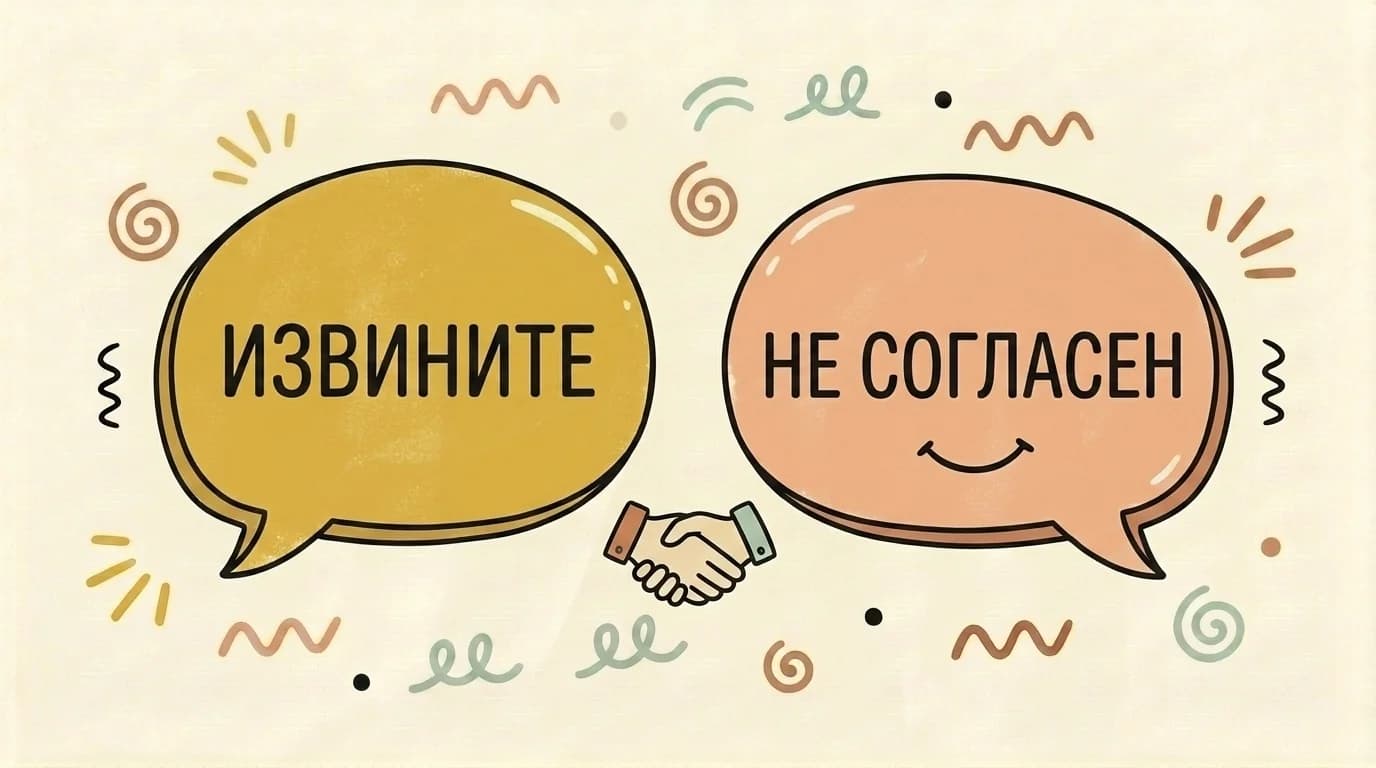
Second, follow Russian Instagram or TikTok accounts. Search for путешествия (puteshestviya, "travel"), еда (yeda, "food"), or книги (knigi, "books"). Read the comments. Comment yourself. Even a simple классно (klassno, "cool") or согласен (soglasen, "agree") gets you interaction. You'll learn slang like кринж (krinzh, "cringe") and хайп (khayp, "hype") without trying.
Third, talk to yourself. Describe what you're doing in Russian. Я варю кофе (ya varyu kofe, "I'm making coffee"). Я иду на работу (ya idu na rabotu, "I'm going to work"). Я злюсь на пробки (ya zlyus na probki, "I'm angry at traffic jams"). It feels silly. It works. You're practicing real sentences in real contexts, not textbook dialogues about buying train tickets to Vladivostok.
The role of 1-on-1 lessons (when you're ready)
At some point, you'll hit a wall. You can understand written Russian, you can follow a slow conversation, but you freeze when someone speaks fast. That's normal. That's where a real person helps.
In my 1-on-1 online lessons, we skip the drills. We talk. I throw slang at you, I correct you mid-sentence, I make you rephrase until it sounds natural. We watch a clip from Ирония судьбы (Ironiya sudby, "The Irony of Fate") and you tell me what happened. We argue about whether борщ (borshch, "borscht") is better hot or cold. (It's cold, obviously. That's a Russian summer dish, not a soup.)
You don't need a teacher to learn Russian. But you need someone to practice with if you want to sound real. A textbook can't tell you that your intonation is off. A textbook can't laugh with you when you accidentally say я беременна (ya beremenna, "I'm pregnant") instead of я устала (ya ustala, "I'm tired"). (That happened to a student. We still laugh about it.)
Tip: When you start lessons, ask for corrections only on things that matter. "Don't correct my case endings when I'm trying to tell a story. Correct my word order and my intonation. I can learn cases later."
Try this today
You don't need to wait for the perfect moment. You can start right now. Here are five mini-tasks that will take you ten minutes total.
-
Change your phone language to Russian. Take a screenshot of your home screen. Try to read every word without looking them up. Write down the three you don't know.
-
Pick one Russian song you've never heard. Search YouTube for
русские песни 2024(russkiye pesni 2024, "Russian songs 2024"). Listen to the first minute. Write down any words you recognize. Don't worry about the rest. -
Describe your current location in Russian. Say it out loud.
Я в комнате(ya v komnate, "I'm in a room").Я сижу на стуле(ya sizhu na stule, "I'm sitting on a chair").Рядом стоит чашка(ryadom stoit chashka, "There's a cup next to me"). Three sentences. That's it. -
Find a Russian meme. Search
русские мемы(russkiye memy, "Russian memes") on Instagram or Twitter. Read the text. If you don't understand, screenshot it and ask a Russian friend or post it in a language exchange group. Memes are gold for slang. -
Say
ну(nu, "well") at the start of your next sentence in English. Then try it in Russian.Ну, я не знаю, что сказать(nu, ya ne znayu, chto skazat, "Well, I don't know what to say"). Congratulations. You just sounded more Russian than any textbook ever taught you.