You have downloaded three different apps, spent twenty minutes tapping on shiny icons, and now you can say "the cat drinks milk" but not "where is the toilet." Something is wrong.
What kind of player are you really?
Most Russian apps are not built for you. They are built for the idea of you, a patient robot who loves flashcards and never needs to actually speak to another human. So let's cut through the noise. I have tested dozens of apps, used them with my students, and watched what actually sticks (and what makes people quit). Here is the honest breakdown.
The Heavy Hitters: Duolingo, Babbel, Rosetta Stone
Duolingo: The Fun Friend Who Never Gets Serious
Duolingo is good at one thing: keeping you in the app. The gamification works. The green owl guilt-tripping you works. You will probably open it every day for a month. That is not nothing.
But here is the catch. Duolingo teaches you to recognize Russian, not to produce it. You will learn молоко (moloko, "milk") because you have seen it forty times. But ask you to say "I need milk" in a real conversation, and your brain freezes. Why? Because Duolingo gives you multiple choice, not a blank page and a real person.
Tip: Use Duolingo for five minutes a day as a warm-up, not as your main course. Do the speaking exercises out loud, even if you feel silly. Your neighbors will survive.
Babbel: The Adult in the Room
Babbel is the app that assumes you have a brain. It explains grammar, gives you real dialogues, and does not pretend you can learn a language by matching pictures to words. For Russian, this is a relief.
The dialogue-based approach works. You learn Извините, где здесь аптека? (Izvinite, gde zdes apteka?, "Excuse me, where is the pharmacy here?") and you can actually use it. The speech recognition is decent, not perfect, but decent.
The downside? It is dry. Babbel feels like a textbook that learned to smile. No memes, no drama, no owl guilt. If you need entertainment to stay motivated, Babbel might bore you by week two.
Heads up: Babbel's Russian course is shorter than its Spanish or French courses. You will finish it faster than you think. Have a backup plan.
Rosetta Stone: The Beautiful Fossil
Rosetta Stone was revolutionary in 2005. In 2024, it feels like a museum piece. The idea is pure: no translation, just pictures and sounds. You see a photo of a woman running, you hear она бежит (ona bezhit, "she runs"), you figure it out.
In theory, this mimics how children learn. In practice, it is frustrating. Russian cases do not work well with pictures. Try guessing the difference between я вижу кота (ya vizhu kota, "I see a cat") and кот спит (kot spit, "the cat sleeps") from images alone. You will guess wrong, and the app will not explain why.
Rosetta Stone is best for pronunciation training. The voice recognition is still top-tier. But for grammar and real communication? Skip it.
The Grammar Nerds: LingQ, Clozemaster, Readlang
LingQ: Read Your Way to Fluency
LingQ is for people who love reading. You import any Russian text (news, blog, song lyrics) and the app helps you read it. Click a word, see its meaning, save it for later. It is like having a patient tutor who never gets tired of your questions.
The magic happens when you stop translating every word and just read. Your brain starts to absorb patterns. You notice that в (v) often means "in" or "to," but sometimes it means something else, and you learn to feel the difference.
Tip: Start with short, funny articles about Russian celebrities or weird news. Do not try to read Tolstoy on day one. You will hate yourself and the app.
Downside: LingQ assumes you already have some vocabulary. If you are a complete beginner, you will spend more time clicking words than reading. Come back after you know about 200 basic words.
Clozemaster: Fill in the Blank, Feel the Burn
Clozemaster is a simple idea: you get a Russian sentence with one word missing, and you type the missing word. That is it. No frills, no stories.
It is brutally effective for learning vocabulary in context. You learn Я люблю _____ (Ya lyublyu _____, "I love _____") and then you see the word читать (chitat, "to read") and you remember it because you had to type it yourself.
The problem? It is repetitive. After 200 sentences, your brain starts to blur. And it does not teach you how to form your own sentences, only how to complete someone else's.
Use Clozemaster for ten minutes after your main study session. It is a drill, not a lesson.
Readlang: The Underdog
Readlang is like LingQ but simpler and cheaper. You paste any Russian text into the browser extension, click words for translations, and it saves them. It also creates flashcards from the words you clicked.
The best feature? It shows you how often a word appears in real Russian texts. You learn that очень (ochen, "very") is everywhere, but весьма (vesma, "quite") is rare. That helps you prioritize.
Readlang is not pretty. The interface looks like a 2010 website. But it works, and it is free for basic use.
The Speaking and Listening Heroes: Pimsleur, RussianPod101, Italki
Pimsleur: Audio Only, No Excuses
Pimsleur is the opposite of a screen. You listen, you repeat, you answer questions. No reading, no typing, no tapping. It forces you to speak out loud.
The method is old-school but effective. You learn Я хочу (Ya khochu, "I want") and then the app asks you "How do you say 'I want to eat'?" and you have to remember Я хочу есть (Ya khochu yest, "I want to eat"). If you pause, the app waits. It is uncomfortable, and that is the point.
Pimsleur is perfect for commutes, walks, or doing dishes. You can finish a 30-minute lesson without looking at your phone once.
Heads up: Pimsleur is expensive. Check if your library has it for free. Many do. Also, the vocabulary is a bit old-fashioned. You will learn Я бы хотел (Ya by khotel, "I would like") before you learn круто (kruto, "cool"). That is fine for formal situations, but you will sound like your grandfather.
RussianPod101: The Buffet
RussianPod101 is a massive library of audio and video lessons, from absolute beginner to advanced. The teachers are native speakers who actually explain things. You learn real phrases like Как дела? (Kak dela?, "How are you?") and Нормально (Normalno, "Okay").
The problem is choice overload. There are hundreds of lessons, and it is easy to waste time browsing instead of studying. Also, the free version is limited. The paid version is worth it if you commit to doing one lesson per day.
Best for: listening practice and cultural notes. They explain why Russians say Да нет, наверное (Da net, navernoye, "Yes no, probably") and what it actually means. That is gold.
Italki: The Real Deal
Italki is not an app in the traditional sense. It is a platform where you find a real Russian teacher (like me) and talk to them. One-on-one, live, on video.
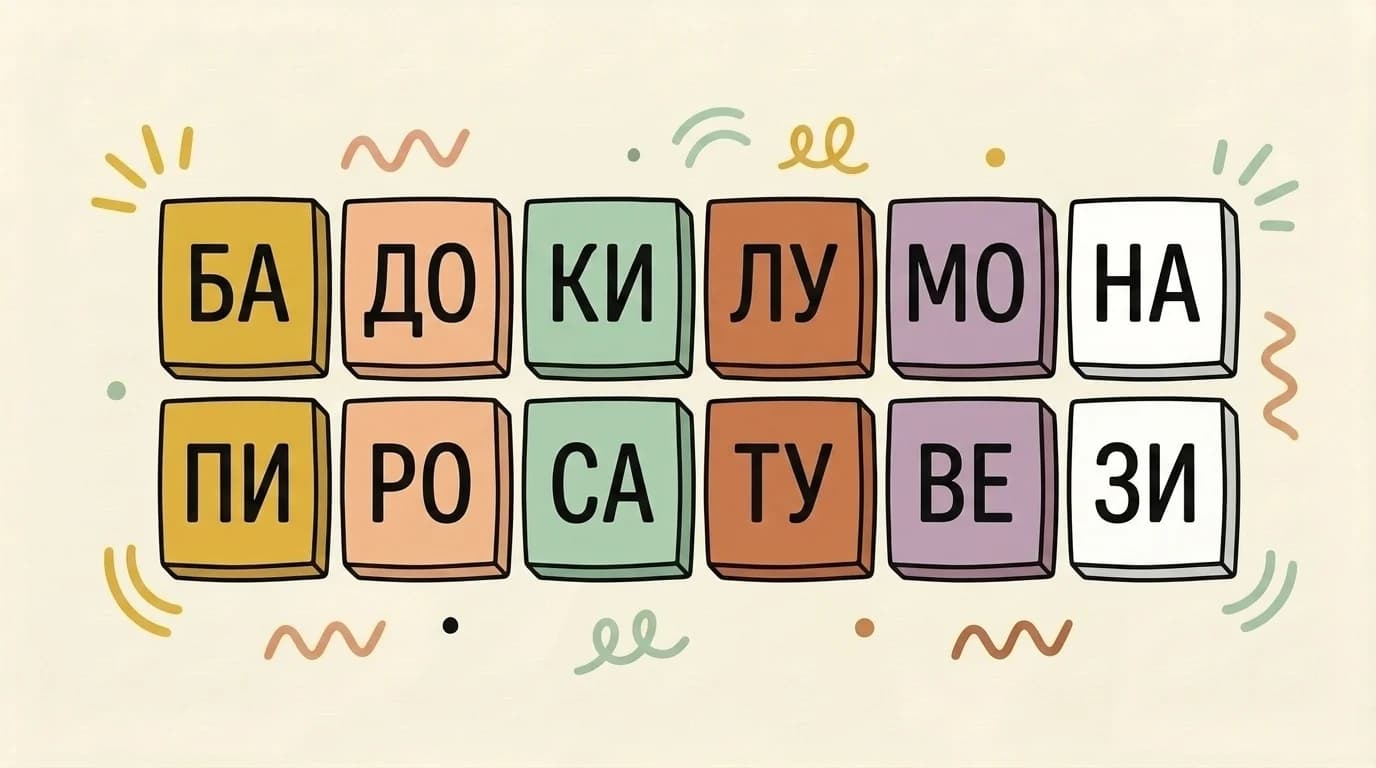
Nothing beats this. Apps can teach you words. A person can teach you how to use those words in a real conversation, with real pauses, real mistakes, and real laughter. You learn Блин (blin, "dang it") because you dropped your pen, not because a flashcard told you to.
Italki is the fastest way to go from "I know some words" to "I can actually talk to people." It is also the most intimidating, because you have to speak. But that is exactly why it works.
The Wildcards: Memrise, Drops, Busuu
Memrise: The Meme Factory
Memrise uses "mems" (silly images and associations) to help you remember words. For example, to remember хлеб (khleb, "bread"), you imagine a loaf of bread wearing a hat and saying "khleb." It is stupid. It works.
The official courses are decent, but the real treasure is the user-created courses. People have made courses for Russian swear words, slang, movie quotes, and song lyrics. Those are the ones that stick.
Downside: Memrise is weak on grammar. You will learn a lot of words and not know how to connect them. Use it for vocab only.
Drops: Pretty but Shallow
Drops is visually beautiful. You swipe, tap, and draw your way through vocabulary. It feels like a game. You learn words like зонт (zont, "umbrella") and чемодан (chemodan, "suitcase") with satisfying animations.
But you never learn to form a sentence. You learn isolated nouns, maybe a few verbs, but no grammar. After a week, you have a collection of words with no way to use them.
Drops is good for killing time on a train. Not for real progress.
Busuu: Social but Shallow
Busuu has a community feature where native speakers correct your exercises. That is genuinely useful. You write a sentence, a Russian person tells you it should be Я иду в магазин (Ya idu v magazin, "I am going to the store") instead of Я иду магазин (Ya idu magazin, missing "to").
The problem is the course itself. It is short and basic. You finish the beginner level and realize you cannot hold a conversation about anything except your name and where you are from.
Busuu is a good supplement, not a main resource.
The Worst Offenders
Some apps are actively harmful. Avoid anything that promises "fluency in 30 days" or "learn Russian while you sleep." That is not how brains work.
Also avoid apps that only teach you the alphabet and then stop. You see these a lot: "Russian Alphabet in 3 Days!" Great. Now what? You know the letters but cannot say a sentence.
Worst of all are apps with bad audio. If the speaker sounds robotic or has a heavy non-native accent, you will learn wrong pronunciation. That is hard to unlearn. Always check that the voice is a real native speaker.
How to Actually Use Apps
Mix them. No single app will teach you Russian. Here is a realistic combo:
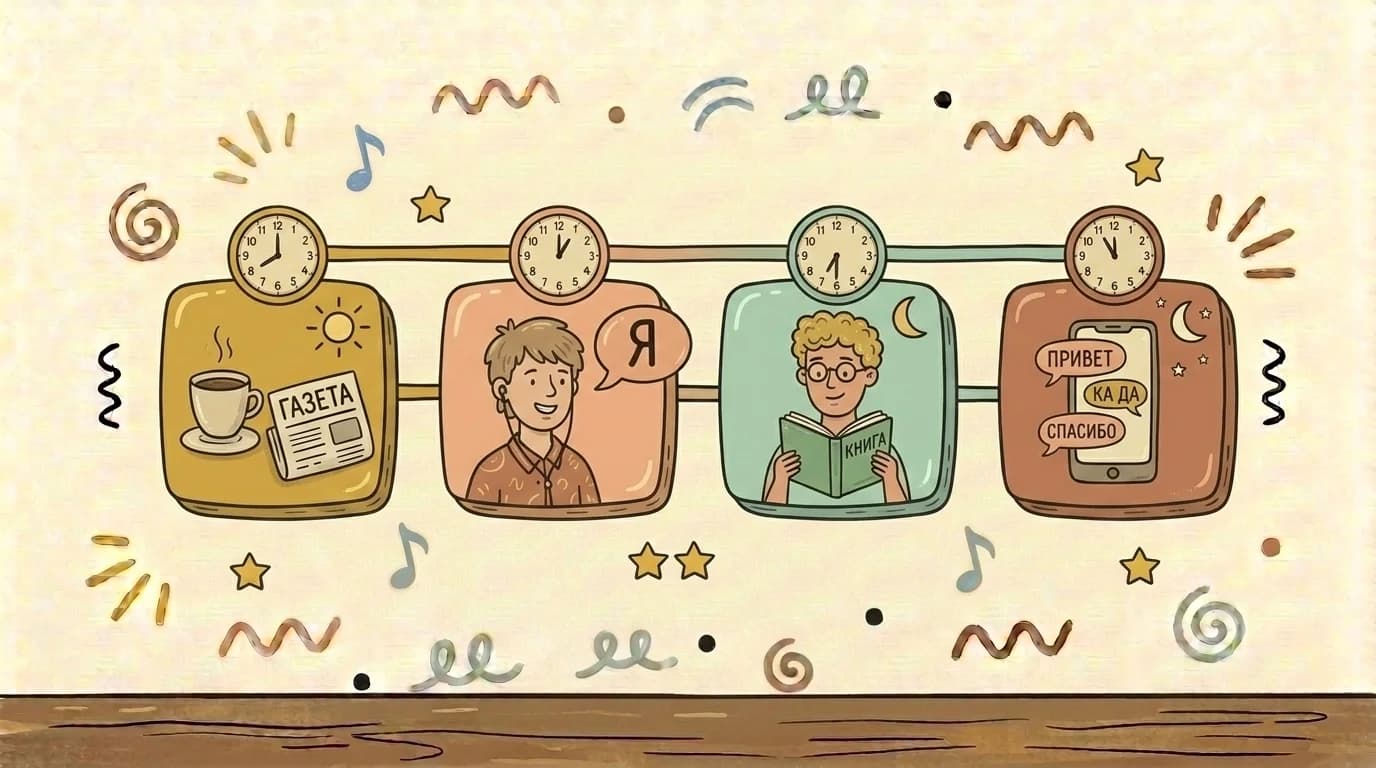
- Morning: 5 minutes of Duolingo or Drops for warm-up.
- Commute: 20 minutes of Pimsleur or a RussianPod101 episode.
- Evening: 10 minutes of LingQ reading a short article.
- Twice a week: 30-minute Italki lesson with a teacher (or join my 1-on-1 online lessons, where we skip the apps entirely and just talk).
Apps are tools, not teachers. Use them to build vocabulary and listening skills. Use a real person to build confidence and conversation.
Try This Today
Do not just read this. Do something.
-
Open Duolingo or any app you already have. Do exactly one lesson. But this time, say every answer out loud, full sentence, no mumbling.
-
Find one Russian song you like. Search for the lyrics on Google. Read them with LingQ or Readlang. Pick three new words and write them down.
-
Record yourself saying
Привет, меня зовут [your name]. Как дела?(Privet, menya zovut [your name]. Kak dela?, "Hi, my name is [your name]. How are you?"). Listen back. Does it sound like the app? No? Good. That is where you start. -
Delete one app that you never use. You know which one. Free the space on your phone and your brain.
-
If you have not spoken to a real Russian speaker yet, find one. Italki, a language exchange, a friend. Say one sentence. Just one. You will survive.