You have been studying Russian for a few weeks. You can read мама (mama, "mom") and папа (papa, "dad") without blinking. Then you open a text and see съезд (s"yezd, "congress") or пять (pyat', "five"). Your brain freezes. Two tiny letters that look like typos: ь and ъ. Your teacher calls them "soft sign" and "hard sign" and says they "change the sound." But your native language has nothing like them. So you skip them. You pronounce мать (mat', "mother") like мат (mat, "checkmate" or "swear word") and hope nobody notices.
What kind of player are you really?
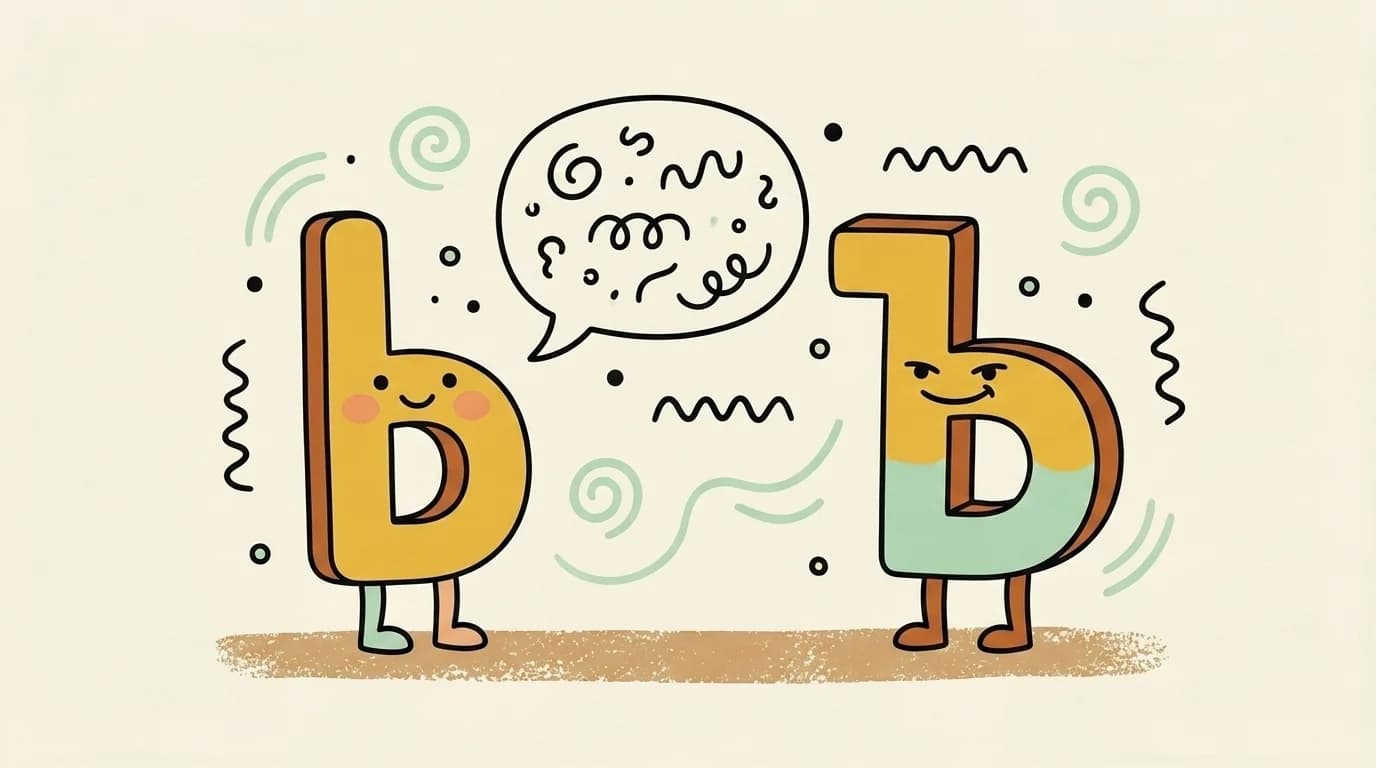
I have been there. I am a native Russian speaker, and I remember explaining these signs to my Polish friends in Warsaw. They have similar sounds in their language, but English speakers? It is a whole different game. So let me break it down without the grammar jargon. Think of the soft sign and hard sign as tiny stage directors. They do not make a sound themselves, but they tell the consonant before them how to behave.
The soft sign ь: the whisperer
The soft sign is the more common of the two. You will see it everywhere. It looks like a lowercase b but without the loop at the bottom. Its job is to make the preceding consonant "soft" or "palatalized." That means you raise the middle of your tongue toward the roof of your mouth while pronouncing the consonant. In English, you do this naturally in some words. Say the word "cute." The c is hard like in "cat." But the t in "cute"? Your tongue touches the roof of your mouth differently. That is palatalization. In Russian, this difference is not optional. It changes meaning.
Take брат (brat, "brother") and брать (brat', "to take"). The first has a hard t. The second has a soft t because of the soft sign. Say them aloud. Брат sounds like "braht" with a flat t. Брать sounds like "braht" with a t that is almost like "tch" but lighter, as if you are about to say "tea" but stop halfway. If you say брат when you mean брать, a Russian speaker will understand you, but they will know you are not a native. And in some cases, the mix-up is worse.
Heads up: The soft sign also appears at the end of feminine nouns. Ночь (noch', "night") and дочь (doch', "daughter") are feminine. Мяч (myach, "ball") is masculine. No soft sign. If you add a soft sign to мяч, you get мячь which is not a word. But if you forget the soft sign on ночь, you get ноч which sounds like a grunt. So pay attention to noun gender. It is not just decoration.
How to practice the soft sign
You can train your tongue. Say the word "million." The l in "million" is soft. Now say "mill" (like the building). The l is hard. In Russian, мел (mel, "chalk") has a hard l. Мель (mel', "shoal" or "sandbank") has a soft l. The difference is subtle but real. Try this: hold your tongue in the "million" position and say л (l). Then switch to the "mill" position. That is the soft sign at work.
Another trick: the soft sign often appears in verbs. Писать (pisat', "to write") has a soft t at the end. Писат is not a word. But писатель (pisatel', "writer") has a soft l. You can see the pattern. The soft sign likes to hang out at the end of words, especially after consonants that are naturally soft in Russian like ч (ch) and щ (shch). Ч is always soft in Russian. So ночь (noch') is soft by default. The soft sign just marks it for grammar.
The hard sign ъ: the bouncer
The hard sign is rarer. You will not see it every day. It looks like a lowercase b with a solid top, no curve. Its job is the opposite of the soft sign. It keeps the preceding consonant hard and forces a slight pause or separation before the next vowel. In English, we have something similar in words like "cooperate" where the double o creates a tiny break. But in Russian, the hard sign is a written signal.
You mostly see it before the vowels е (ye), ё (yo), ю (yu), я (ya). Without the hard sign, these vowels would soften the consonant before them. For example, сесть (sest', "to sit down") has a soft s because of the е. But съесть (s"yest', "to eat up") has a hard s because of the hard sign. The s stays hard, and then you say ye as in "yes." The difference is small but crucial. Сесть is about sitting. Съесть is about eating. Do not mix them up at a dinner party.
Tip: If you see a hard sign, think of it as a wall. The consonant before it stays hard. The vowel after it is pronounced clearly, as if starting a new syllable. Practice with объявление (ob"yavleniye, "announcement"). Say об (ob) with a hard b, then a tiny pause, then явление (yavleniye). The hard sign keeps the b from melting into the я.
Where the hard sign lives
The hard sign is not random. It appears after prefixes that end in a consonant, before roots that start with е, ё, ю, я. For example, под (pod, "under") + езд (yezd, "entrance") = подъезд (pod"yezd, "entranceway"). Without the hard sign, it would be подезд (podezd) which is not a word. The hard sign keeps the prefix and root separate.
In Soviet times, the hard sign was even more common. It used to appear at the end of words after consonants, like хлебъ (khleb, "bread"). But after the 1918 spelling reform, it was removed from word endings. Now it only appears in the middle of words. So if you read old Russian texts, you will see a lot of hard signs. Modern Russian uses it sparingly. You will probably learn it through a handful of words: съезд (s"yezd, "congress"), объём (ob"yom, "volume"), разъяснить (raz"yasnit', "to explain").
Why they matter for your accent
English speakers often skip the soft and hard signs because they seem invisible. But Russians hear them. If you say мать (mat', "mother") without the soft sign, it sounds like мат (mat, "checkmate" or a swear word). That is a big difference. Similarly, угол (ugol, "corner") without the soft sign is fine. But уголь (ugol', "coal") needs that soft l. If you ask for уголь and say угол, a Russian might hand you a corner instead of coal. Not ideal.
The hard sign is less common but equally important. Сел (sel, "he sat") and съел (s"yel, "he ate") are different words. One letter changes the meaning. And if you are reading a menu, you might see съедобный (s"yedobny, "edible") and седобный (sedobny) is not a word. But you get the idea.
A cultural note
In Russian music and poetry, the soft sign is often used for rhyme and rhythm. Listen to any song by Zemfira or DDT. You will hear soft signs at the end of lines. They create a gentle, flowing sound. The hard sign, on the other hand, feels abrupt. It is like a full stop in the middle of a word. Think of the word объезд (ob"yezd, "detour"). You say об then a break then езд. It sounds like a car hitting a bump. That is the hard sign.
If you watch Russian movies, pay attention to how actors say words like пьеса (p'yesa, "play") or друзья (druz'ya, "friends"). The soft sign in друзья makes the з (z) soft. It sounds almost like "drooz-ya" with a soft z. Without it, друзя would be flat. The soft sign adds warmth.
Common mistakes and how to fix them
The biggest mistake English speakers make is ignoring the soft sign entirely. They pronounce пять (pyat', "five") as "pyat" with a hard t. It sounds like пят which is not a word. The correct pronunciation is "pyat" with a soft t. Your tongue should touch the roof of your mouth just behind your teeth. Practice with пять, десять (desyat', "ten"), восемь (vosem', "eight"). All end in a soft sign. Say them slowly. Feel the tongue lift.
Another mistake is overdoing the softness. Some learners add a "y" sound after the consonant. Пять becomes "pyat-yuh." That is too much. The soft sign does not add a vowel. It only changes the consonant. Think of it like a spice. A little changes the flavor. Too much ruins the dish.
Tip: Record yourself saying minimal pairs. Брат vs брать. Ест (yest, "he eats") vs есть (yest', "there is" or "to eat"). Мел vs мель. Listen to the difference. If you cannot hear it, ask a native speaker or use Forvo. Your ear will adjust over time.
Try this today
You do not need to memorize grammar rules. You need to train your mouth. Here are four mini-tasks to do right now. No app required. Just your voice.
-
Say the word
мать(mat', "mother") five times. Focus on the softt. Your tongue should touch the roof of your mouth. Then sayмат(mat, "checkmate") five times. Thetis flat. Alternate between them.Мать...мат...мать...мат. Do it until you feel the difference. -
Find the word
объявление(ob"yavleniye, "announcement") in a song or text. Say it slowly:об(hardb), pause,явление(yavleniye). Repeat it three times. Then tryобъяснить(ob"yasnit', "to explain"). Same pattern. -
Write down five Russian words you know that end in a consonant. Add a soft sign to each. For example,
стол(stol, "table") becomesстоль(stol', "so" or "to such an extent"). Say both. Notice how the meaning changes.Столis a noun.Стольis an adverb. Not all combinations are real words, but the exercise trains your ear. -
Listen to a Russian song on YouTube. Pick one with clear vocals, like "Москва" by Oxxxymiron or "Танцы" by Zivert. Pause at the end of each line. Does the word end in a soft sign? If yes, how does the singer pronounce it? Imitate that sound. Do not worry about meaning. Just focus on the softness.
If you want personalized feedback, I teach 1-on-1 lessons online. We can work on your soft and hard signs in real conversation. No drills. Just real talk about music, travel, or whatever you like. But for now, start with these four tasks. Your tongue will thank you.